Link Building Benefits: 9 Reasons It Still Matters for SEO in 2026
- June 13, 2026
Why Link Building Still Matters — And Who This Guide Is For
73% of SEO professionals say backlinks are still in Google’s top 3 ranking signals in 2025 — yet most websites treat link building as an afterthought.
If you’ve ever wondered whether link building is still worth your time, or if it actually moves the needle for small and mid-size websites, this guide answers that clearly — with data, examples, and a step-by-step breakdown of every major benefit.
Whether you’re a blogger, digital marketer, or business owner, understanding the real link building benefits will help you make smarter SEO decisions and stop wasting time on tactics that no longer work.
In this guide, you'll discover:
- 9 proven link building benefits backed by current SEO research
- The difference between white hat and black hat link building
- Why link building remains critical even in the age of AI search
- A practical framework to start building links the right way
What Is Link Building?
Quick Answer — What is link building?
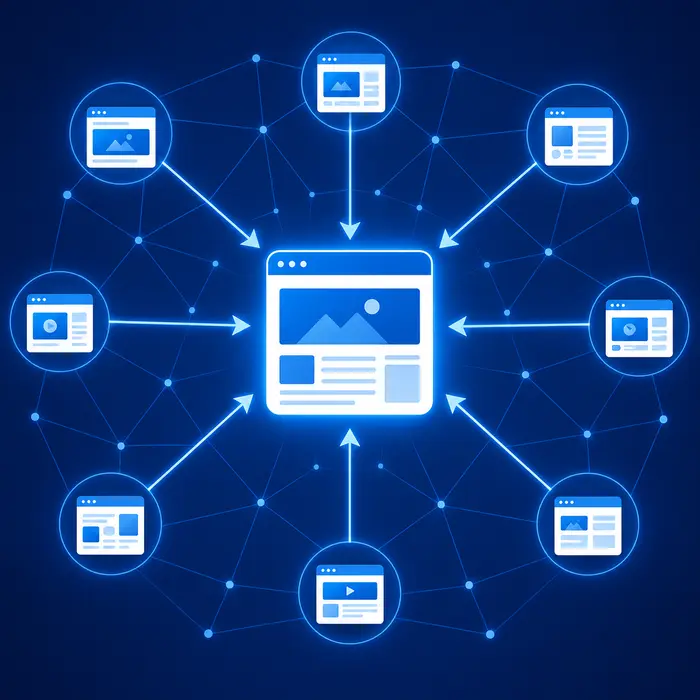
Link building is the process of acquiring hyperlinks from other websites to your own site. These backlinks act as votes of confidence for search engines like Google, signalling that your content is trustworthy and authoritative. The more high-quality backlinks a page earns, the better it tends to rank in organic search results.
Think of every backlink as a recommendation. When a respected website links to yours, it is essentially telling Google: ‘This content is worth reading.’
Google’s original PageRank algorithm was built on this very idea — and despite hundreds of algorithm updates, inbound links remain one of the most powerful ranking factors today.

Is Link Building Still Important in 2026?
Short answer: Yes — and the evidence is overwhelming.
| 8 of 20 | top Google ranking factors are backlink-related Semrush, 2024 ↗ |
| 75,000+ | backlinks earned by a single original research post Backlinko ↗ |
| Top 3 | position for backlinks among all SEO ranking signals, per Google's own statements Semrush ↗ |
| 2026 | link building remains essential for traditional Google rankings Backlinko, 2026 ↗ |
Google itself has confirmed that links help it determine the quality and credibility of web pages. While the algorithm has evolved — and unlinked brand mentions and co-citations now carry increasing weight — links remain the clearest signal of authority online.
The question is not whether link building works. The question is which link building benefits matter most to your specific goals.
9 Proven Link Building Benefits You Need to Know
Let’s break down each benefit in detail — with real-world context, not just theory.
1. Higher Rankings in Google Search Results
Quick Answer
How do backlinks improve rankings?
Backlinks transfer 'link authority' (also called PageRank) to your website. Pages with more high-quality backlinks tend to rank higher because Google treats them as more credible and relevant. This is one of the oldest and most consistent link building benefits in SEO history.
Every quality backlink you earn from a relevant, authoritative site acts as an authority vote. Over time, a strong backlink profile lifts not just one page — it raises the overall domain authority of your entire website, making it easier to rank for competitive keywords.
Key insight: Links from high-authority domains (news sites, industry journals, established blogs) carry far more weight than links from low-quality directories or unrelated websites.
2. Increased Organic Traffic — Not Just Rankings
Ranking higher is a means to an end. The real goal is more organic visitors. Link building delivers traffic in two distinct ways:
- Indirect traffic: Higher rankings bring more impressions and clicks from search results
- Direct referral traffic: Visitors who click through from the linking page itself
A single backlink from a high-traffic blog post can send hundreds of qualified visitors to your site — completely independent of your Google rankings.
3. Faster Indexing of New Pages
Googlebot discovers new content by following links. When a high-authority site links to your new blog post or product page, Google finds and indexes it much faster than if it were sitting in isolation.
This is especially valuable for newer websites and fresh content that hasn’t yet built organic visibility.
4. Building Domain Authority Over Time
Domain Authority (DA) and Domain Rating (DR) are third-party metrics used by tools like Moz and Ahrefs to estimate how likely a domain is to rank. While not official Google metrics, they correlate strongly with organic performance.
Each quality backlink you earn contributes to your domain’s overall authority score — creating a compounding SEO advantage that grows over months and years.
5. Establishing Topical Authority and E-E-A-T
Google’s quality rater guidelines centre on E-E-A-T: Experience, Expertise, Authoritativeness, and Trustworthiness. Backlinks from authoritative sources in your niche are one of the clearest signals that your site has genuine expertise.
When industry publications, trusted blogs, and academic sources link to your content, it tells both Google and users that you are a credible voice in your field.

6. Referral Traffic That Converts
Unlike paid traffic that stops the moment you stop spending, referral traffic from backlinks is persistent. A link placed in a relevant, high-traffic article can drive qualified visitors to your site for years.
Referral visitors are often highly targeted — they clicked because the content context was relevant to their interest — which typically leads to lower bounce rates and higher conversion potential.
7. Brand Visibility and Industry Recognition
Every backlink is a brand mention. Even users who do not click the link see your brand name associated with credible content. Over time, this brand exposure builds familiarity and trust across your target audience.
In 2025 and beyond, this brand signal matters beyond Google. AI systems like ChatGPT, Perplexity, and Google’s AI Overviews increasingly rely on brand mentions and co-citations — not just links — to determine which sources to recommend and quote.
8. Competitive Advantage — Gaps Your Competitors Haven't Filled
Your competitors’ backlink profiles are a roadmap of opportunities. Sites that already link to multiple competitors in your niche are very likely to link to you too — if you create content that is more comprehensive, more current, or more original.
Tools like Ahrefs’ Site Explorer and Semrush’s Backlink Gap report allow you to find exactly which sites link to your competitors but not to you — turning this benefit into a concrete action plan.
9. Long-Term SEO Compounding — The Snowball Effect
Unlike most marketing channels, a strong backlink profile compounds over time. High-authority links bring in more organic traffic, which leads to more brand mentions, which earns more natural links — creating a self-reinforcing cycle.
This is why sites with established backlink profiles dominate SERPs year after year, even with less frequent content updates. The investment in link building pays dividends long after the outreach is done.
White Hat vs Black Hat Link Building: What's the Difference?
Quick Answer — What is white hat link building?
White hat link building refers to ethical strategies that comply with Google's guidelines — such as earning links through original content, digital PR, and genuine outreach. Black hat link building involves manipulative tactics like buying links or using private blog networks (PBNs), which violate Google's policies and risk manual penalties.
| ✅ White Hat (Recommended) | ❌ Black Hat (Avoid) |
|---|---|
|
|
Does Link Building Still Work in the Age of AI Search?
This is the most important — and least-covered — question in link building benefits today. The answer is nuanced.
Traditional Google rankings still depend heavily on backlinks. But in 2025, authority is built across multiple surfaces:
- Google SERPs and AI Overviews — still heavily influenced by backlink profiles
- ChatGPT, Perplexity, Claude — these AI systems are trained on data that includes who cites whom, making brand mentions and co-citations increasingly valuable
- Unlinked brand mentions — Google and AI engines can recognise brand associations even without a clickable link
Expert Insight
"Link building in 2026 remains essential for improving your rankings in traditional search. But if you want visibility in AI search, you need to think beyond backlinks. The real opportunity is becoming a consistently referenced source in your niche through brand mentions, co-citations, and reputable coverage."
The practical implication: the best link building strategies in 2026 are the ones that simultaneously earn backlinks and brand mentions. Original research, digital PR campaigns, and free tools accomplish both — which is precisely why they are the most future-proof tactics available.

How to Start Building Links: A 5-Step Framework
Knowing the benefits is only half the equation. Here is a practical entry point for any website, regardless of size or niche:
- Audit your existing backlink profile using Ahrefs’ free Backlink Checker or Semrush’s Backlinks tool. Understand your current baseline.
- Identify your top-performing pages — the content that already earns links or organic traffic. Double down on creating more of this type of content.
- Research competitor backlinks using a Backlink Gap analysis. Find sites that link to competitors but not to you — these are your warmest outreach targets.
- Create one linkable asset — original data, a free tool, a comprehensive guide, or a digital PR campaign. This is the foundation of sustainable link building.
- Conduct personalised outreach to 50–100 targeted prospects per campaign, using a direct email with a compelling reason for them to link. Track responses and iterate.
Conclusion: Link Building Benefits Are Still Real — and Growing
The core value of link building has not diminished. If anything, the stakes are higher: in a search landscape increasingly shaped by AI, the websites that dominate are those that are consistently cited, referenced, and recommended by credible sources across the web.
The 9 link building benefits covered in this guide — from higher rankings and organic traffic to E-E-A-T signals, brand authority, and AI search visibility — are not theoretical. They are measurable outcomes that compound over time for every website willing to invest in earning quality links.
The most important thing you can do today: stop treating link building as an add-on and start treating it as a core content strategy — one that runs in parallel with every piece you publish.
Before auditing your backlinks, make sure your on-page foundation is solid. A weak page structure will undermine even the strongest backlink profile. Start with our complete On Page SEO guide for WordPress if you haven’t already.
Frequently Asked Questions (FAQ)
These are the most commonly searched questions about link building — answered concisely for readers and optimised for AI answer engines and Google’s People Also Ask.
SEO improves your website's overall visibility in search results. Link building is its most powerful off-page component. When authoritative websites link to your content, Google treats it as a trust signal — boosting your page's authority and ranking potential. Simply put: SEO builds the foundation; link building tells Google your site is worth ranking.
There are four main types. Earned links come naturally when others reference your original content or research — the highest quality. Asked-for links involve outreach like guest posting, digital PR, or broken link building. Added links are manually placed on directories, forums, or Q&A sites. Paid links violate Google's guidelines unless tagged rel="sponsored" and carry penalty risk. White hat methods — earned and asked-for — are always the recommended approach.
Start by auditing your existing backlink profile with Ahrefs or Semrush. Create a strong linkable asset — original research, a free tool, or a comprehensive guide. Analyse competitor backlinks to find outreach targets. Send personalised, value-focused emails to 50–150 relevant sites. Track new and lost links monthly, and refresh top pages every 6 months to keep earning links organically.
Backlinks are the actual hyperlinks on other websites pointing to yours — they are the result. Link building is the active strategy you use to acquire those links — it is the process. Think of it this way: backlinks are the trophy; link building is the competition you run to win them.